Summary
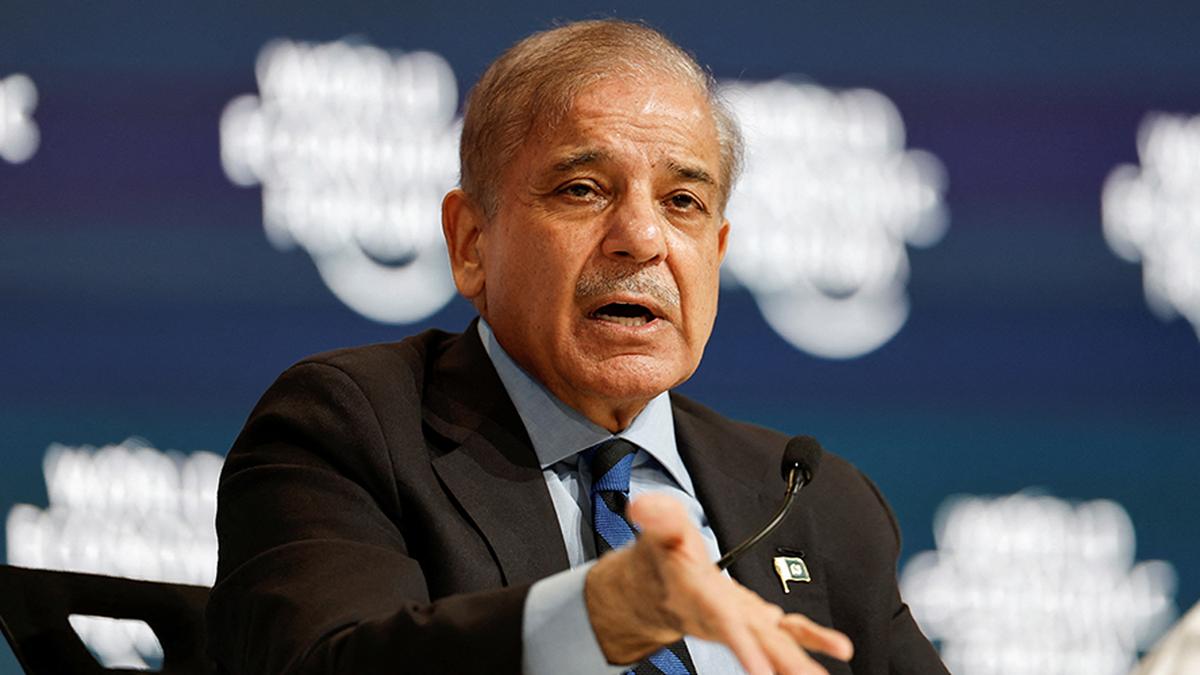
A Pakistan business delegation made up of US-based Pakistani business lead0ers met Prime Minister Shehbaz Sharif on the sidelines of the United Nations General Assembly in New York on Thursday. The prime minister used the meeting to invite the group to explore new investment opportunities, pointing to reforms he said had put the country’s economy on a firmer footing.
Background
Engagement between Islamabad and the Pakistani diaspora in the United States has picked up over the past year as the government has looked for new sources of foreign investment outside traditional lending channels. The US-Pakistan Business Council and the Business Council for International Understanding, the two groups represented at this week’s meeting, have periodically hosted such exchanges, but this session carried added weight given the timing, coming just months after the government said it had completed a difficult stabilisation phase.
The meeting also took place against a backdrop of regional uncertainty, with the ongoing crisis in the Gulf weighing on trade routes and energy costs that affect Pakistan directly.
Details
During the sit-down, PM Shehbaz laid out the sectors he wants the delegation to consider, naming agriculture, mining, information technology, energy, ports and shipping, and privatisation as priority areas. He framed these as sectors where government policy is now geared toward attracting private capital rather than running state-led projects.
He also described the structural changes made in recent years, citing the digitisation of the broader economy, reforms inside the Federal Board of Revenue, and a wider rollout of e-governance tools meant to cut red tape for businesses. The prime minister told the delegation that business councils like theirs could act as a bridge between Islamabad and Washington, helping translate improved diplomatic ties into actual trade and investment flows.
Beyond the economic discussion, the premier also met the UN secretary-general to discuss efforts toward peace in the Middle East, telling him that regional instability had hit Pakistan at a difficult point in its recovery.
Quotes
The prime minister told the delegation that Pakistan’s government sees its job as supporting private enterprise rather than replacing it, saying the state’s role is to “facilitate and act as a catalyst” for business rather than to become a business itself. He also acknowledged that circumstances beyond Pakistan’s control, namely the Gulf crisis, had complicated the recovery effort even as domestic reforms took hold.
Impact
For a Pakistan business delegation of this kind, the practical value lies less in the speeches and more in what happens after the meeting ends. US-based Pakistani entrepreneurs often have both capital and networks that Pakistan’s government wants to tap, particularly in technology and energy, sectors where the diaspora has built up decades of experience abroad.
If the sectors named this week attract real commitments, the effect could extend to job creation and export capacity inside Pakistan, particularly in IT services and ports infrastructure, both areas the government has flagged repeatedly as growth priorities. If the meeting proves to be mostly symbolic, it will add to a pattern of diplomatic outreach that has not always converted into measurable investment inflows.
Conclusion
This week’s meeting fits into a broader pattern of the Shehbaz government pitching Pakistan’s economic turnaround to audiences abroad, particularly the Pakistani-American business community. Whether the specific sectors highlighted, from ports and shipping to information technology, see follow-up investment will be the clearer indicator of whether this kind of outreach is translating into results, rather than the statements made in New York this week alone.
FAQs
How is the economy in Pakistan now?
Officials describe Pakistan’s economy as having stabilised after a period of high inflation and financial strain, with price growth down from nearly 38 percent to single digits and the central bank’s policy rate reduced to 11 percent. The government points to reforms in tax administration, digitisation of government services, and improved foreign exchange reserves as signs of a turnaround. International assessments have broadly echoed this cautious optimism, while flagging that risks around external financing needs and industrial performance have not fully disappeared.
Is Pakistan GDP 400 billion?
Yes, in nominal terms Pakistan’s GDP has surpassed 400 billion dollars, with estimates for recent years ranging from roughly 410 billion to over 450 billion dollars depending on the data source and the specific year measured. This marks a notable increase from levels seen just a few years earlier, when the nominal figure sat closer to 300 to 370 billion dollars. On a purchasing power parity basis, which accounts for local price levels, Pakistan’s economy is valued considerably higher, at more than 2 trillion dollars.
What is the rank of Pakistan’s economy?
Pakistan is generally ranked around the 40th-largest economy in the world by nominal GDP. Measured on a purchasing power parity basis, it ranks closer to 20th globally, a reflection of its large population size relative to many economies ranked above it in nominal terms. Despite this relatively high overall ranking, Pakistan’s GDP per capita remains low by international standards, which is part of why officials continue to stress the need for export growth and foreign direct investment.